Saint Vincent housing with Batichêne
Heritage Renovation in Burgundy
When medieval heritage and contemporary architecture meet through BatiChêne
In Burgundy, at the heart of a listed site marked by a strong medieval identity, a major renovation project has recently been completed under the direction of architect Ludovic Forest. This exceptional project delicately illustrates the meeting of two temporalities: that of historic heritage, rich with history, and that of a confident, understated, and technically demanding contemporary architecture.
Working on a listed site involves a particular responsibility. Every architectural decision must respect the existing structure, engage in dialogue with it, and become part of a cultural and constructive continuity. The objective was neither to freeze the building in the past nor to imitate historical forms, but to introduce a contemporary architectural language capable of revealing and enhancing the medieval architecture.
To meet this ambition, the choice of material proved decisive. The project required a solution that was structural, durable, precise, and aesthetically coherent with the spirit of the place. In this context, oak CLT naturally emerged as the most appropriate choice.
A Material in Resonance with History
Oak holds a special place in the history of French construction. Used for centuries in roof structures, floors, and major structural elements, it embodies strength, longevity, and the nobility of natural materials. In a medieval environment, its use is therefore not merely aesthetic but part of a cultural continuity.
BatiChêne reinterprets this tradition through contemporary technology. Thanks to the cross-laminated timber principle, it provides high structural performance, excellent dimensional stability, and manufacturing precision suited to modern construction requirements. It thus becomes a bridge between ancestral craftsmanship and modern engineering.
In this project, the material does not attempt to blend into the historic structure through imitation. On the contrary, it confidently expresses its contemporary character while respecting the materiality of the site. The dialogue between medieval stone and solid oak creates a carefully balanced tension that highlights the qualities of both.
A Durable and Coherent Structural Solution
Beyond the heritage dimension, the renovation also had to meet specific structural requirements. The contemporary interventions required a load-bearing solution capable of ensuring strength, longevity, and reliability.
Oak CLT made it possible to design structural elements that are both efficient and elegant. Its ability to span significant distances while maintaining controlled structural sections offers great architectural freedom. This structural performance is matched by excellent long-term stability—an essential factor in heritage contexts where the durability of interventions is paramount.
Sustainability is also environmental. As a renewable resource, oak stores carbon throughout its lifecycle and supports a more responsible approach to construction. In a project where the longevity of the building itself already reflects a form of sustainability — having endured for centuries — the use of a bio-based material extends this virtuous logic.
Natural Aesthetics Without Artifice
One of the project’s strong design choices lies in the raw expression of the material. The oak CLT was left exposed, without unnecessary finishing layers. This decision reinforces the architectural honesty of the intervention.
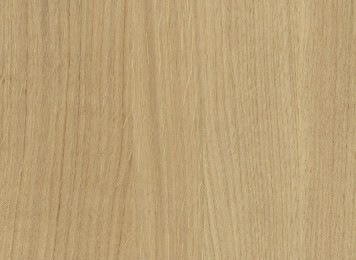
The warm tone of oak, its pronounced grain, and its living texture bring a sensory dimension to the space. The warmth of wood responds to the mineral quality of the stone. The precision of machined panels contrasts with the roughness of the ancient walls. This duality creates a powerful spatial experience where the distinction between old and new is immediately perceptible.
The absence of additional finishing also reflects a philosophy of constructive sobriety. The material stands on its own merits, fulfilling its structural role while offering intrinsic aesthetic quality. This approach avoids decorative excess and emphasizes the authenticity of the wood.
Innovative Implementation Serving the Project
The success of a heritage renovation depends as much on execution as on design. Oak CLT enabled a precise intervention adapted to the constraints of the existing structure.
Thanks to off-site prefabrication, the elements were dimensioned with exact precision before arriving on site. This accuracy minimizes adjustments during installation, reduces construction time, and limits the impact on the historic structure. In a listed environment, such control is essential to preserving the integrity of the original building.
Innovation here lies not only in the material technology but also in its use as a full architectural element. The panels are not concealed; they actively contribute to the spatial composition, structure the volumes, and affirm the modernity of the project.
A Committed Architectural Vision
Through this project, Ludovic Forest demonstrates a sensitive and committed approach to heritage renovation. Materials are never chosen randomly—they convey intention, vision, and a way of inhabiting and transmitting the spirit of a place.
BatiChêne thus becomes more than a simple construction product. It contributes to a broader reflection on how to intervene within existing structures, build sustainably, and highlight local resources.
This project illustrates the ability of solid wood to integrate into highly demanding contexts : technical, regulatory, and heritage alike. It also proves that modernity and tradition are not opposed, but complementary.