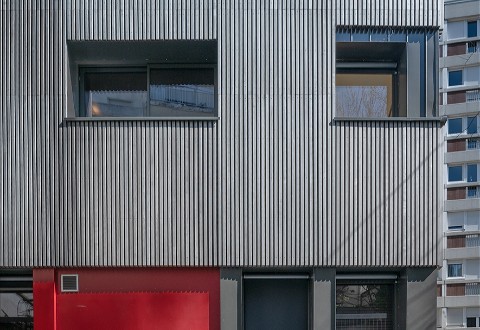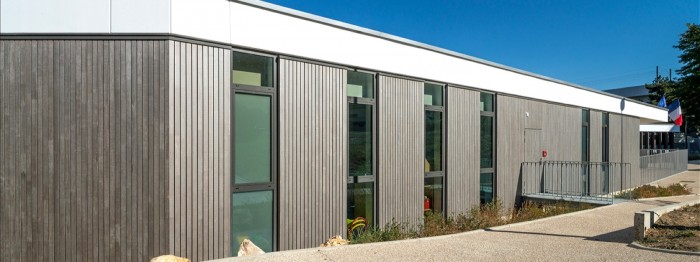
School Marie Curie
St Germain-en-Laye (78)
Wood Cladding for Sustainable Public Projects
In construction and renovation projects led by public authorities, every architectural choice goes far beyond the building itself. The objective is to create spaces that are durable, functional, and pleasant to use, while meeting increasingly demanding environmental standards.
In Saint-Germain-en-Laye (78), the restructuring and extension of the Marie Curie school complex perfectly illustrate this approach. For this project, wood stands out as a key material at the intersection of aesthetic, technical, and environmental challenges.
Wood in Public Projects : A Strategic Choice
Why integrate wood into public buildings ?
In a context where public authorities must reconcile energy performance, sustainability, and quality of life, wood emerges as a highly relevant solution.
Natural, renewable, and recyclable, it actively contributes to reducing the carbon footprint of buildings. By storing carbon throughout its lifespan, it helps combat greenhouse gas emissions.
Beyond its environmental impact, wood also enhances user comfort. It improves visual comfort by bringing warmth and softness to spaces.
A Solution Tailored to the School’s Needs
How can thermal performance, aesthetics, and durability be combined in an educational facility ?
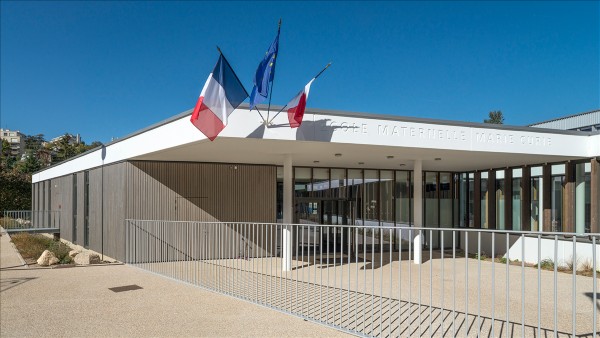
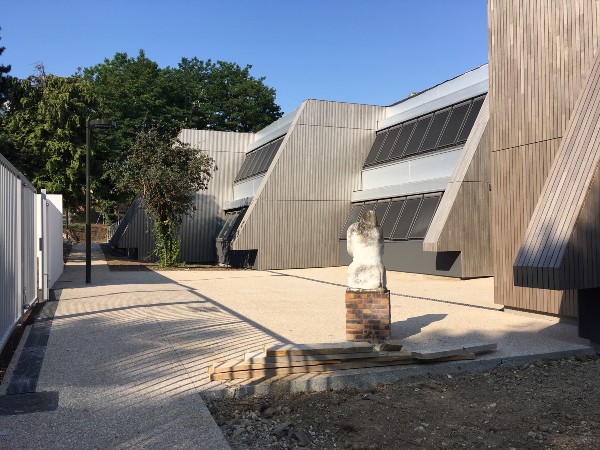
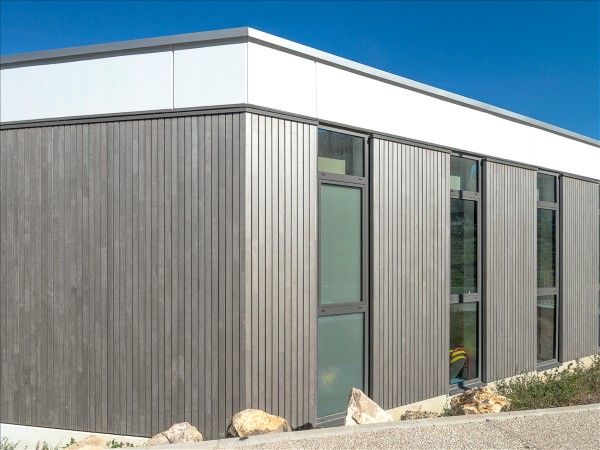
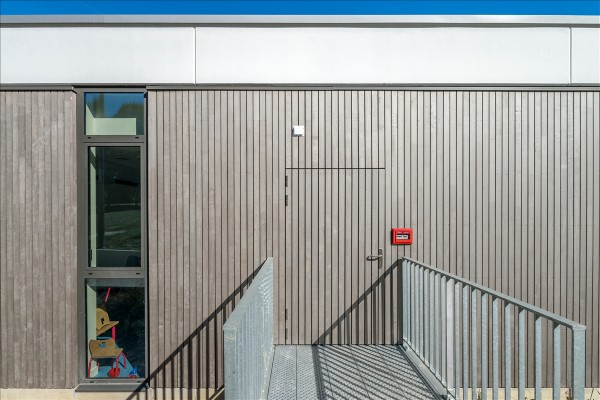
As part of the renovation of the Marie Curie school complex, hardwood cladding was chosen to cover an external thermal insulation system. This solution significantly improves the building’s energy performance while enhancing its architectural identity.
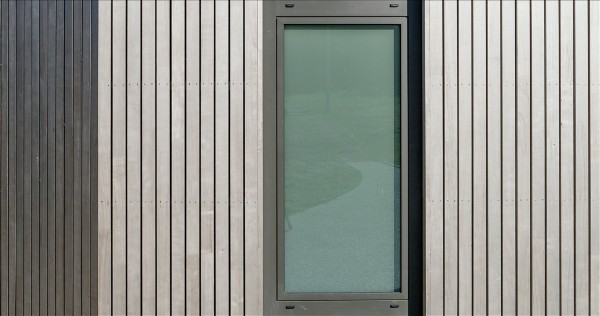
The selected material is thermally modified poplar (THT) from the Côtéparc® range. Pre-greyed, with a “weathered grey wood” finish, it blends harmoniously into its surroundings while offering a contemporary and durable aesthetic.
This choice meets several objectives: reducing maintenance requirements, ensuring long-term material stability, and achieving visual consistency with the urban environment.
THT Poplar : Performance and Ease of Installation
What are the advantages of thermally modified poplar ?
Thermally modified poplar offers numerous technical advantages. Lightweight, stable, and durable, it is particularly suited to large-scale construction projects such as public facilities.
Its resistance and stability ensure excellent long-term performance. In addition, it retains a strong aesthetic dimension, which is essential for buildings open to the public.
A Sustainable Solution for Public Facilities
This project perfectly illustrates the value of wood in public construction. By combining thermal performance, durability, aesthetics, and low environmental impact, THT poplar cladding meets the current requirements of public infrastructure.
For the Marie Curie school complex, this is not merely a technical choice, but a true architectural and environmental statement. The building becomes a functional and welcoming space while embodying the values of sustainability and responsibility promoted by the local authority.
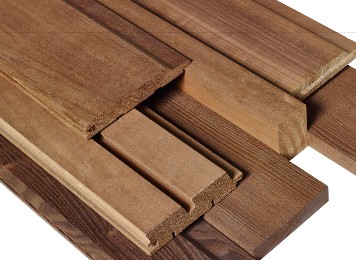
Range : Côtéparc® – BARD 100 profile
Species : Thermally modified poplar (THT)
Finish : Weathered grey (pre-greyed)
Sections : 65 mm width × 25 mm thickness
Wood volume : 26.406 m³ finished
Client : City of Saint-Germain-en-Laye (78)
Architects : Olivier Desaleux – Desaleux-Soares Architectes associés (Paris 18th) & Lusso & Laurent Architectes (93)
Installer : Cruard Charpente Constructions Bois (53)
Also to read : Interview file of Olivier Desaleux and Cruard Charpente Bois on the project
Photo credits : Ducerf Groupe / Desaleux-Soares Architectes / Cruard Charpente Bois